Durga Saptashati
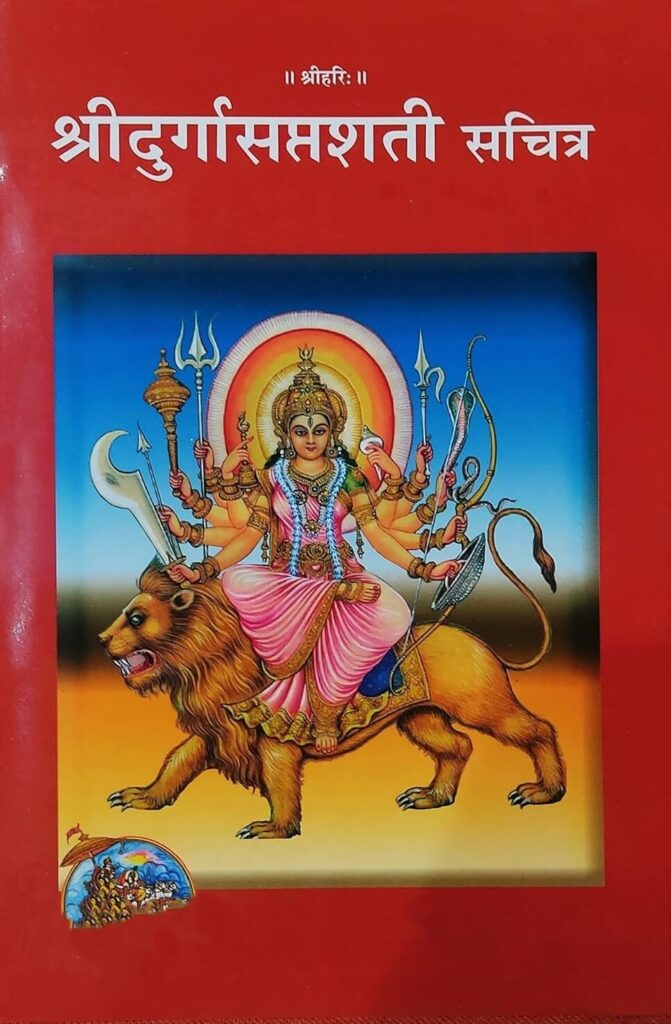
Read or Download Durga Saptashati
Durga Saptashati: Unveiling the Divine Feminine Power
In the kaleidoscope of Hindu mythology, few texts shine as brightly as the Durga Saptashati, a sacred scripture that unveils the prowess of the divine feminine. Also known as the Devi Mahatmya or Chandi Path, this powerful composition narrates the cosmic battle between the goddess Durga and the demon Mahishasura. Embedded within its verses are profound teachings, symbolic metaphors, and a celebration of the eternal feminine energy that governs the universe.
The Essence of Durga Saptashati:
Durga Saptashati, a collection of 700 verses divided into three sections, recounts the tale of Durga’s triumph over the buffalo demon Mahishasura. The text is often chanted during Navaratri, a nine-night festival dedicated to the goddess Durga. Each section, known as “Charitras,” presents a different aspect of the goddess’s power, emphasizing her role as the ultimate protector and nurturer.
The Cosmic Battle:
The narrative unfolds as the demon Mahishasura, blessed with invincibility by Lord Brahma, unleashes a reign of terror upon the heavens. The gods, unable to withstand his might, turn to the trinity—Brahma, Vishnu, and Shiva—who, in their collective wisdom, create the formidable goddess Durga. Empowered by the energies of various gods, Durga wages a cosmic battle against Mahishasura, symbolizing the eternal struggle between good and evil.
Symbolism and Metaphors:
Durga Saptashati is a tapestry of symbolism and metaphors, inviting seekers to delve into its deeper meanings. Durga, with her multiple arms holding various weapons, signifies the all-encompassing nature of the divine. Her riding a lion, the king of the jungle, represents her fearlessness and mastery over the forces of nature.
The slaying of Mahishasura, who morphs between buffalo and human forms, represents the triumph of righteousness over ego-driven delusion. This battle is not merely a physical clash but a symbolic representation of the perpetual struggle within every individual to overcome inner demons and embrace higher virtues.
The Three Charitras:
- Mahakali Charitra: In the first section, Durga appears as Mahakali, the fierce aspect of the goddess. She annihilates the demon Raktabija, whose every drop of blood gives rise to a clone. The goddess overcomes this challenge by drinking his blood, symbolizing the need to address problems at their root. This underscores the transformative power of the divine feminine in eradicating the seeds of negativity.
- Mahalakshmi Charitra: In the second section, Durga transforms into Mahalakshmi, the goddess of wealth and prosperity. This phase of the narrative highlights the goddess’s role in bestowing blessings and abundance upon her devotees. The emphasis here is on the nurturing and nourishing aspects of the divine feminine, reinforcing the belief that she is the source of all prosperity and well-being.
- Mahasaraswati Charitra: The final section portrays Durga as Mahasaraswati, the goddess of knowledge and wisdom. In this form, she defeats the demon Shumbha-Nishumbha, who represents ignorance. The victory of Mahasaraswati underscores the transformative power of wisdom, symbolizing the dispelling of ignorance through the light of knowledge.
The Spiritual Significance:
Beyond the epic battle and symbolic imagery, Durga Saptashati holds immense spiritual significance. It is not merely a story of external conquest but an allegory for the inner journey towards self-realization. The demons Durga faces represent the obstacles and distractions that individuals encounter on their path to spiritual growth.
The recitation of Durga Saptashati is believed to invoke the protective energies of the goddess, providing strength and guidance to navigate life’s challenges. Each verse is a divine incantation, resonating with the cosmic vibrations of the goddess, creating a transformative experience for the devotee.
Navaratri Celebrations:
Navaratri, the festival dedicated to the goddess Durga, involves the worship of the divine feminine in her various forms over nine nights. Devotees engage in prayer, fasting, and cultural celebrations, culminating in the victory of Durga over Mahishasura on the tenth day, known as Vijayadashami or Dussehra.
The symbolism of Navaratri extends beyond religious boundaries, emphasizing the universal themes of overcoming darkness with light, ignorance with knowledge, and evil with goodness. It is a time of introspection, purification, and celebration of the divine feminine energy that sustains the cosmos.
Conclusion:
Durga Saptashati, with its potent verses and profound symbolism, serves as a guiding light for seekers on the spiritual path. It not only narrates a cosmic battle but invites individuals to confront their inner demons and recognize the transformative power of the divine feminine within. As devotees chant the verses during Navaratri, they participate in a sacred journey, aligning themselves with the cosmic energies that transcend time and space. Durga Saptashati stands as a testament to the eternal strength of the feminine, urging humanity to embrace the divine within and without, fostering a harmonious balance in the cosmic dance of existence.