Upanishad
The Upanishads are a collection of philosophical and mystical texts that form a crucial part of the Vedic literature in Hinduism. Composed in Sanskrit, these ancient scriptures are considered the culmination of Vedic thought and are sometimes referred to as Vedanta, meaning “the end of the Vedas.” The Upanishads explore profound spiritual and metaphysical concepts, delving into the nature of reality, the self (Atman), and the ultimate reality (Brahman).
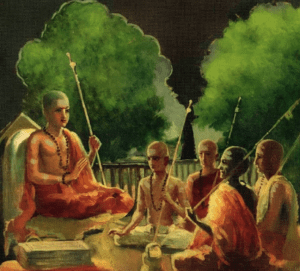
These texts often take the form of dialogues between a teacher (guru) and a student (shishya), discussing topics such as meditation, ethics, cosmology, and the nature of existence. The Upanishads emphasize the importance of direct spiritual experience and contemplation to attain knowledge and self-realization.
The Upanishads have significantly influenced Hindu philosophy and have also left a lasting impact on the broader spiritual landscape, inspiring various schools of thought within and beyond the Hindu tradition. They are considered a profound source of wisdom and are often studied alongside the Vedas to gain a comprehensive understanding of Hindu philosophical teachings.