Vishnu Puran
Read or Download Vishnu Puran
Vishnu Purana: Nurturing the Cosmic Order Through Timeless Wisdom
In the vast expanse of Hindu scriptures, the Vishnu Purana shines as a radiant gem, offering a profound exploration of the cosmos, spirituality, and the divine. Composed in classical Sanskrit, the Vishnu Purana is a revered text that traces the cosmic evolution and expounds on the timeless wisdom imparted by Lord Vishnu. As one of the eighteen Mahāpurāṇas, it serves as a comprehensive guide to the intricacies of the universe, weaving together myths, cosmology, and ethical teachings.
The Architect of Creation:
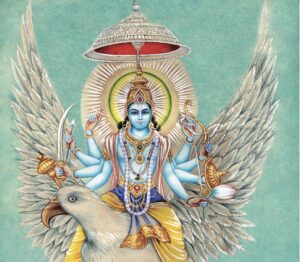
At the heart of the Vishnu Purana is the portrayal of Lord Vishnu as the sustainer and preserver of the cosmic order. Vishnu is not just a deity; he is the cosmic architect, the one who maintains equilibrium in the universe. The Purana narrates the stories of Vishnu’s incarnations (avatars), each undertaken to restore cosmic balance and protect dharma (righteousness) when it faces peril.
Cosmic Evolution and Dissolution:
The Vishnu Purana unfolds the grand tapestry of cosmic evolution, describing the creation, preservation, and eventual dissolution of the universe. It introduces the concept of Yugas, or cosmic ages, where each Yuga marks a different phase in the cyclical rhythm of time. From the golden age of Satya Yuga to the turbulent era of Kali Yuga, the Purana delineates the ebb and flow of cosmic energies.
Liberation Through Devotion:
One of the central themes of the Vishnu Purana is the path to liberation (moksha) through devotion (bhakti). The Purana extols the transformative power of unwavering devotion to Lord Vishnu as a means to transcend the material world and attain spiritual liberation. The narrative emphasizes that sincere and selfless devotion is a key to realizing the divine essence within oneself.
The Story of Prahlada:
Embedded within the Vishnu Purana is the timeless story of Prahlada, a young devotee of Vishnu who stands unwavering in his faith despite facing adversity. The narrative of Prahlada and his encounters with the tyrannical demon king Hiranyakashipu exemplifies the triumph of righteousness over tyranny, illustrating the potency of devotion in the face of challenges.
The Cosmic Ocean and Churning of the Milk:
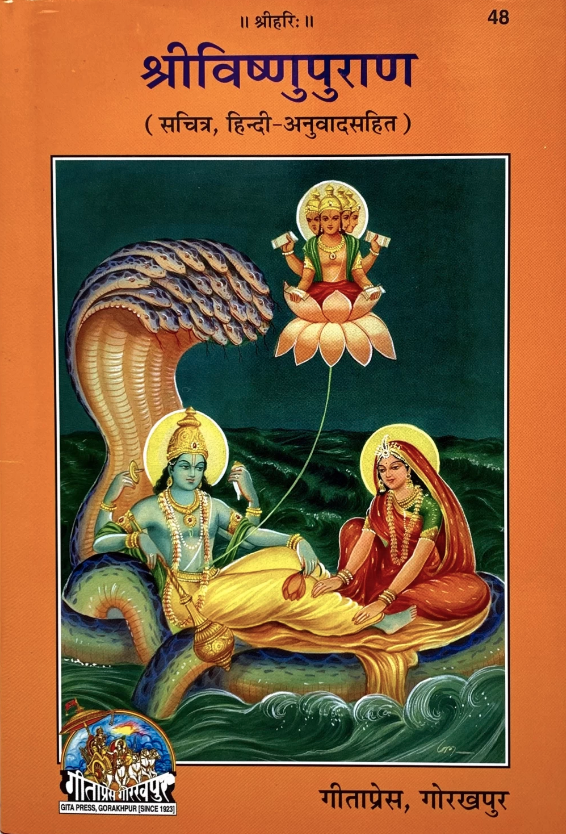
The Purana vividly describes the cosmic ocean and the churning of the milk (Samudra Manthan), a celestial event involving gods and demons. This cosmic drama unfolds with the purpose of obtaining the nectar of immortality (amrita). Lord Vishnu plays a pivotal role in ensuring the success of the churning, symbolizing the cosmic forces at work to maintain harmony in the universe.
Vishnu’s Incarnations:
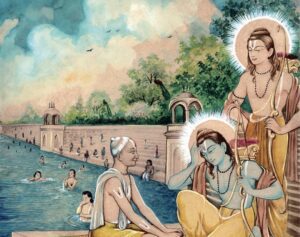
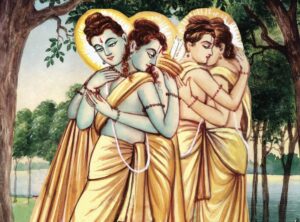
The Vishnu Purana enumerates the ten principal avatars of Lord Vishnu, known as the Dashavatara. From the fish incarnation (Matsya) to the future Kalki avatar, each incarnation serves a specific cosmic purpose, restoring order and dispelling darkness. The narratives of Rama and Krishna, two of the most celebrated avatars, are expounded upon in intricate detail, emphasizing the divine play (Lila) of Vishnu on Earth.
Ethical and Moral Guidelines:
Woven into the fabric of the Purana are ethical and moral guidelines that delineate righteous conduct (dharma). The narrative provides insights into the principles governing familial, societal, and cosmic harmony. Through the teachings of sage Parashara, the Vishnu Purana imparts a code of conduct that aligns with the cosmic order, fostering a sense of responsibility and virtue.
The Concept of Time:
The Vishnu Purana delves into the multifaceted concept of time, describing it as cyclical, eternal, and inexorable. Time, in Hindu cosmology, is portrayed as a wheel that revolves through the ages, shaping the destiny of the cosmos. The Purana invites contemplation on the transient nature of life and the significance of aligning one’s actions with the timeless principles of dharma.
Connection with Other Deities:
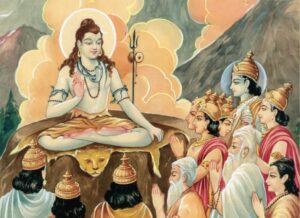
While Lord Vishnu is the primary focus of the Purana, the text acknowledges the interconnectedness of the divine forces. It describes the cosmic trinity—Brahma, the creator; Vishnu, the preserver; and Shiva, the destroyer—as integral aspects of the cosmic order. The Purana emphasizes the complementary roles these deities play in sustaining the balance of the universe.
Continuity of Tradition:
The Vishnu Purana is not a static scripture; it is part of a living tradition that has been transmitted through generations. Its verses are recited in prayers, studied in philosophical discourses, and revered by seekers on the spiritual path. The continuity of this tradition ensures that the timeless wisdom of the Vishnu Purana remains a guiding light for those seeking deeper insights into the mysteries of existence.
The Relevance Today:
In a world marked by rapid change and uncertainty, the teachings of the Vishnu Purana remain relevant and resonate with seekers of diverse backgrounds. Its exploration of cosmic order, ethical conduct, and the transformative power of devotion transcends cultural and temporal boundaries, providing a roadmap for navigating the complexities of contemporary life.
Conclusion:
In the verses of the Vishnu Purana, seekers find a sacred journey into the heart of cosmic wisdom and divine unfoldment. The Purana is not merely a collection of myths; it is a living tapestry that weaves together the threads of creation, preservation, and dissolution. As individuals engage with its verses, they embark on a profound exploration of the timeless principles that govern the cosmos—a journey that leads them to the essence of existence, where the divine dance of Lord Vishnu nurtures the cosmic order through the eternal rhythms of time.